Sight Word Games for Kids: Fun Ways to Learn Sight Words at Home
10 sight word games kids actually want to play, plus which words to teach by grade and what reading experts recommend so practice sticks.
By The Castellan Team · · 6 min read
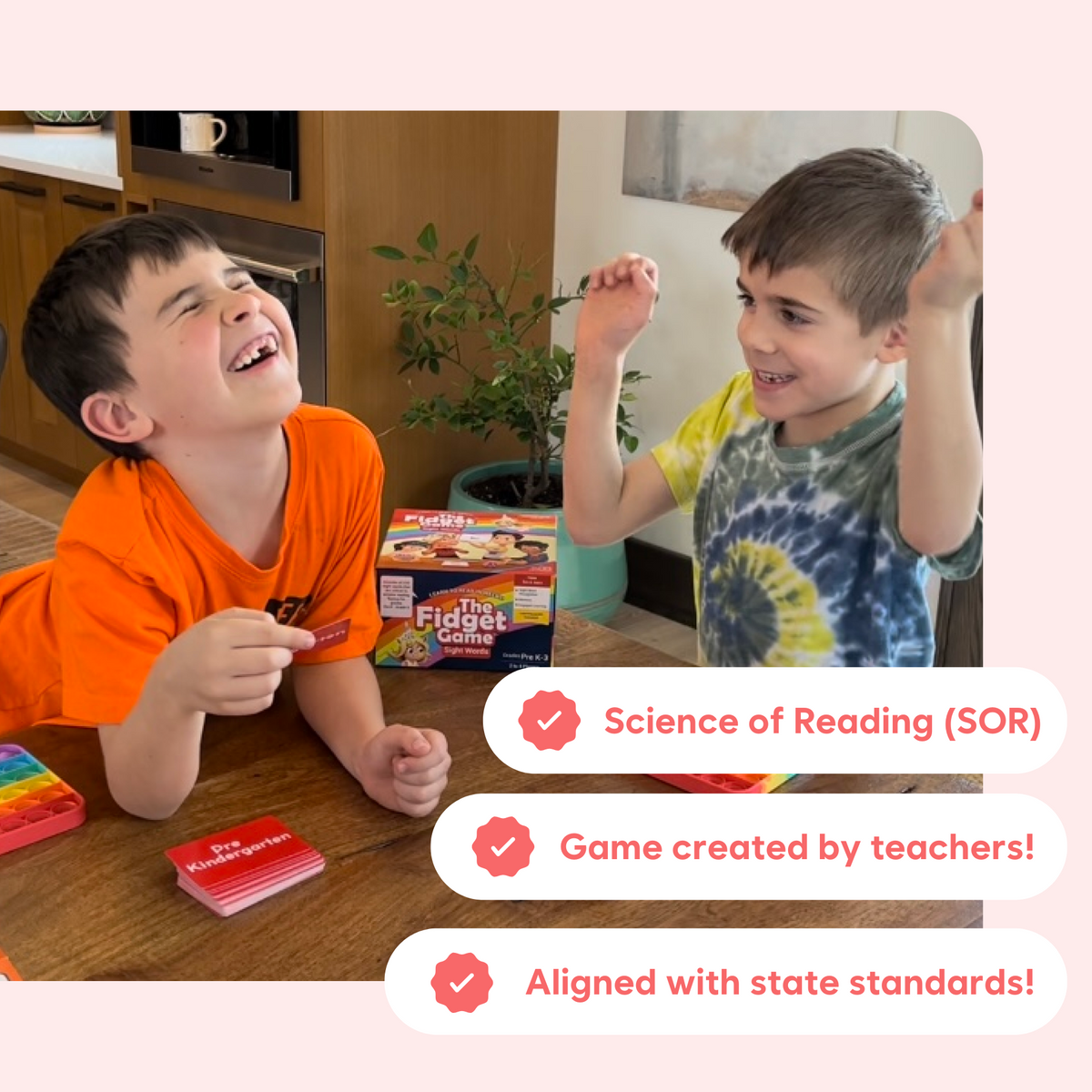
Sight word games are the fastest, friendliest way to help kids recognize common words like the, said and was instantly. That instant recognition is what turns slow, word-by-word sounding out into fluent reading. Below are 10 sight word games you can play at home, most with nothing more than paper and a pen, plus what reading experts recommend so the practice actually sticks.
What are sight words?
A sight word is any word a reader recognizes instantly, without sounding it out. High-frequency words are the words that appear most often in print: the, and, a, to, said, you, it, was. They make up a large share of the words in early readers. Many are also tricky to decode with beginner phonics (think said, of or one). That's why kindergarten and first grade classrooms spend so much time on them.
Two lists come up again and again:
- The Dolch list: 220 "service words" plus 95 common nouns, compiled by Edward William Dolch from children's books of the 1930s and grouped from pre-primer to Grade 3.
- The Fry list: the 1,000 most common words in English reading material, compiled by Edward Fry, usually taught in sets of 100.
Your child's school will usually send home its own list. Use that one, because it matches what they're seeing in class.
Don't just drill flashcards: what the research says
Here's the part many parents never hear: memorizing lists on their own doesn't build a sight-word vocabulary. Reading Rockets, a respected literacy resource, explains that words become "sight words" through orthographic mapping. That's when a child connects a word's letters to its sounds and meaning, which glues it into long-term memory (Reading Rockets).
In practice, that means:
- Teach a few words at a time, 3 to 5 new words a week, not 20.
- Point out the regular parts. In said, the s and d sound exactly as expected. Only the ai is tricky.
- Mark the tricky part "by heart." Many teachers draw a little heart over the irregular letters, which is why you'll hear them called heart words.
- Review a little every day, mixing old words with new ones.
- Read, write and build the words, not just look at them.
Every game below follows those rules: a few words, lots of repetition, and plenty of saying, seeing and writing.
10 sight word games kids actually want to play
1. Sight word bingo
Write 9 or 16 sight words on a grid for each player (mix the order on each card). Call a word, and players find it and cover it. First to get a line shouts "Bingo!" and reads the line aloud. That last step is the important bit. Want a ready-made version? Our Sight Words + Extra Rainbow Mats game covers the most common words for each grade from kindergarten to Grade 2, with rainbow pop-it mats for hands-on practice.
2. Pop it and say it
Write sight words on small sticky notes and stick them on the bubbles of a pop-it fidget. Your child reads a word, then pops it. Read it wrong? No pop until they've tried again with a hint. Children who love sensory play will happily do 30 words this way. (Rainbow pop-it mats also come with our ABC Bingo for younger kids still learning letters.)
3. Sight word hopscotch
Chalk a hopscotch grid outside and write a word in each square. Kids read each word as they land on it. Rainy day? Use paper plates on the floor.
4. Flashlight hunt
Tape words around a darkened room. Hand over a flashlight and call a word: "Find because!" It's part game, part adventure, and it works brilliantly at bedtime.
5. Go Fish (sight word edition)
Make two cards for each of 10–15 words. Play Go Fish: "Do you have where?" Kids have to read their own cards and listen for the words, so they get double the practice.
6. Rainbow writing
Write a word in pencil, then trace over it three times in three different colors, saying each letter as they trace, then the whole word. Saying, seeing and writing a word together is exactly the kind of practice that helps it stick.
7. Build it, then break it
Use magnetic letters or letter tiles. Say a word, let your child build it, then mix up the letters and build it again. Point out which letters "say what they should" and which part is the heart part.
8. Sight word Snap / Slap
Lay 6–8 word cards face up. Call a word, and the first to slap it keeps it. Siblings love this one; just set a no-slapping-hands rule.
9. Board game race
Draw a simple path of 20 squares and write a sight word in each. Roll a die, move, and read the word you land on. Read it correctly to stay; miss it and go back one. Any board game becomes a sight word game this way, and number board games are good for math too (more on that in our fun math games for kids guide).
10. Find it in a book
Pick this week's three words and go on a hunt through a favorite picture book. Tally how many times each appears. Kids are amazed how often the shows up, and they see why these words matter.
Which sight words to teach first, by grade
| Stage | Typical age | Example words |
|---|---|---|
| Pre-K / pre-primer | 4–5 | a, I, the, see, and, go, to, my, we, can |
| Kindergarten | 5–6 | he, she, is, you, said, was, like, are, come, here |
| Grade 1 | 6–7 | of, from, have, they, were, what, when, once, put, could |
| Grade 2 | 7–8 | because, before, does, which, would, very, always, their, write, around |
These are examples drawn from common Dolch and Fry levels. Always follow your child's school list if they send one home.
Tips that make sight word practice work
- Keep it short. Ten minutes a day beats an hour on Sunday.
- Stop while it's fun. End on a win so they want to play tomorrow.
- Mix in "mastered" words so your child feels successful, aiming for about 80% known and 20% new.
- Let them be the teacher. Kids who "quiz" a parent are reading every word to check your answer.
- Celebrate reading a real sentence. "I can see the cat" is a huge moment when your child reads it themselves.
When to use a ready-made sight word game
Homemade games are perfect, but a ready-made game saves the prep, adds variety and keeps the words leveled for you. Our Learn to Read collection is designed by teachers for exactly this age:
- ABC Bingo (ages 3+): letters and letter sounds, the step before sight words.
- Sight Words + Extra Rainbow Mats (K–Grade 2): the most common words for each grade level, plus extra rainbow pop-it mats.
- Growing Reader Bundle (K–Grade 2): Sight Words, Reading Digraphs (sh, ch, th) and SquishyLand: Rainbow Reef together, our best value for new readers.
Make it part of game night. Reading games fit perfectly into a weekly family game night. Here's how to start a screen-free family game night, and our list of the 15 best family board games by age.
Sight word games FAQ
How many sight words should a kindergartener know?
It varies by school, but many kindergarten lists include roughly 25–50 words by the end of the year. Follow your child's school list, which matches what they're learning in class.
Should kids memorize sight words?
Not by rote alone. Reading experts recommend connecting the letters to sounds and teaching only the irregular part "by heart." Memorizing lists without phonics doesn't build lasting sight words (Reading Rockets).
What is the difference between Dolch and Fry sight words?
Dolch is a list of 220 service words plus 95 nouns, grouped pre-primer to Grade 3. Fry is a longer list of the 1,000 most common words in reading material, usually taught 100 at a time.
How long should sight word practice take each day?
About 5–10 minutes is plenty for young children, as long as it happens most days. Short, playful and frequent works best.
Ready for game night?
Wooden classics and teacher-designed learning games that get the whole table playing in under 20 minutes.